The Forge Master of Sakai: The Story of Satoshi Nakagawa
In the ancient cutlery city of Sakai, Japan, where generations of bladesmiths have shaped steel into art for over six centuries, a new legend is quietly being forged. His name is Satoshi Nakagawa, and in the tight-knit world of Japanese knife collecting, that name carries serious weight.
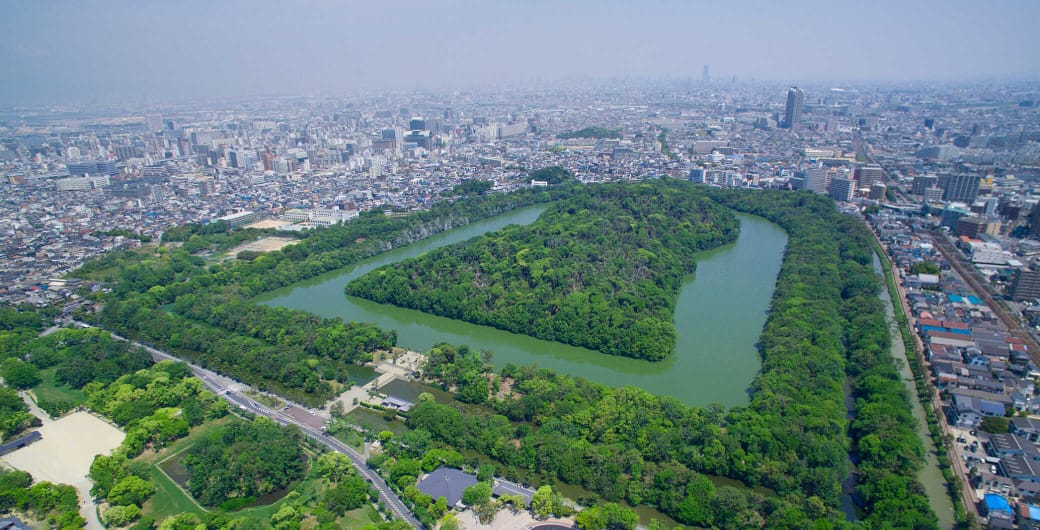
View of Sakai City
Nakagawa's story begins earlier than most. While other teenagers were finding their footing in life, a seventeen-year-old Satoshi was already captivated by the heat, rhythm, and discipline of the forge. At eighteen, he took the decisive step of formally apprenticing under one of Sakai's most celebrated masters, Kenichi Shiraki, a blacksmith whose name commanded deep respect across Japan's knife-making world. What followed was not a brief training stint, but a profound sixteen-year immersion into the craft. When Shiraki-san fell ill, Nakagawa stepped up and ran the workshop himself, gaining an understanding of the trade that went far beyond the hammer and anvil.
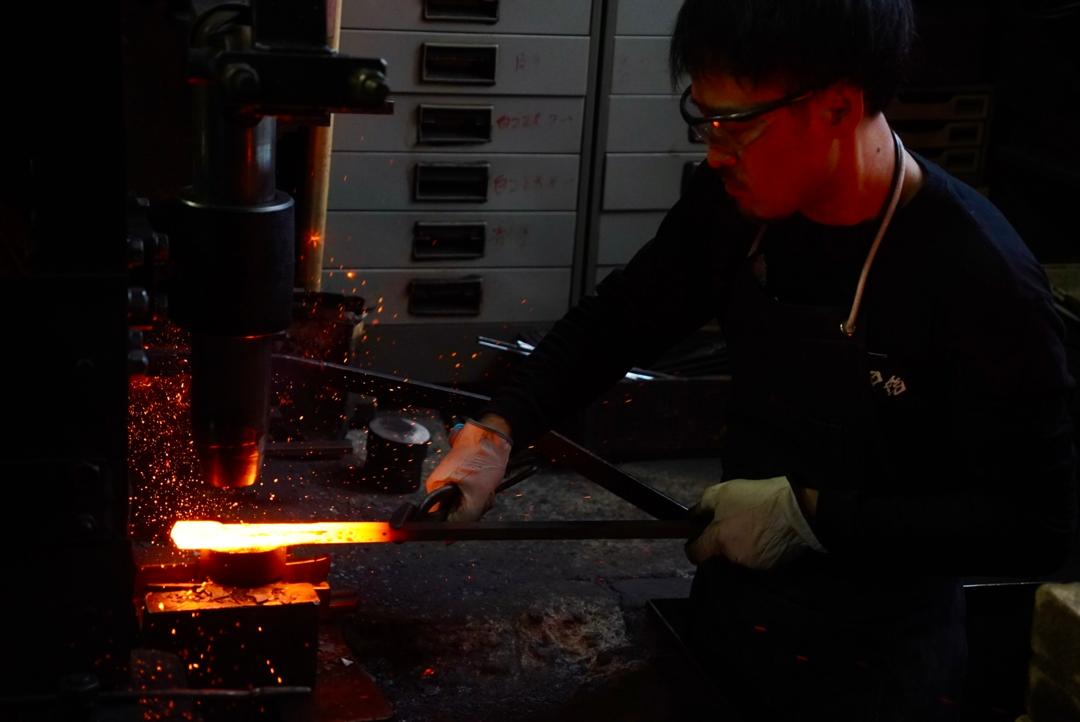
Nakagawa approaches the forge with absolute conviction
When his master eventually retired in 2020, Shiraki made a choice that spoke volumes. He passed the torch entirely to Nakagawa, his only apprentice, his sole successor. In April 2021, Nakagawa established his own workshop, Nakagawa Uchihamono, and immediately began producing work under his own name. In doing so, he also became the youngest person to hold the title of Traditional Craftsman in Sakai, a prestigious designation that recognises those carrying forward Japan's living craft heritage.
What sets Nakagawa apart in an already elite field is his staggering range. He works across nearly every major steel type in Japanese knifemaking, from White carbon steel to Blue carbon steel, Ginsan stainless, and VG10. He forges both single and double-bevel blades, and for his single-bevel work, he even forge-welds his own steel, a level of end-to-end mastery that is genuinely rare. His Damascus blades, finished by the gifted sharpener and polisher Naohito Myojin, are widely regarded as works of art, combining technical excellence with breathtaking aesthetics.
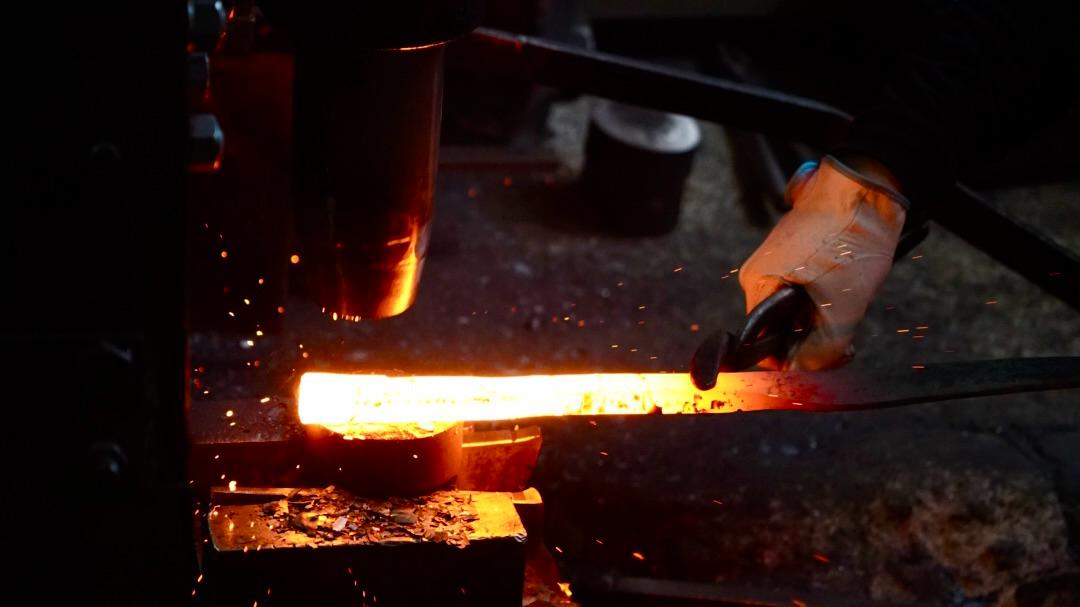
His hammer work is relentless and precise, the blade taking form at remarkable speed
But it is his honyaki blades that have made the knife world truly take notice. Honyaki knives, forged from a single piece of steel and subjected to differential heat treatment, are among the most difficult objects to produce in all of Japanese craftsmanship. Most blacksmiths who attempt them face a failure rate of around seventy percent. Nakagawa has somehow inverted that reality, achieving a success rate of ninety percent. More remarkably still, he is one of only an estimated four blacksmiths in the entire world capable of producing Mizu-honyaki blades, knives quenched in water rather than oil, using Shirogami #1 steel. It is a feat that demands extraordinary control over heat, timing, and an intuition developed over decades of deeply lived practice.
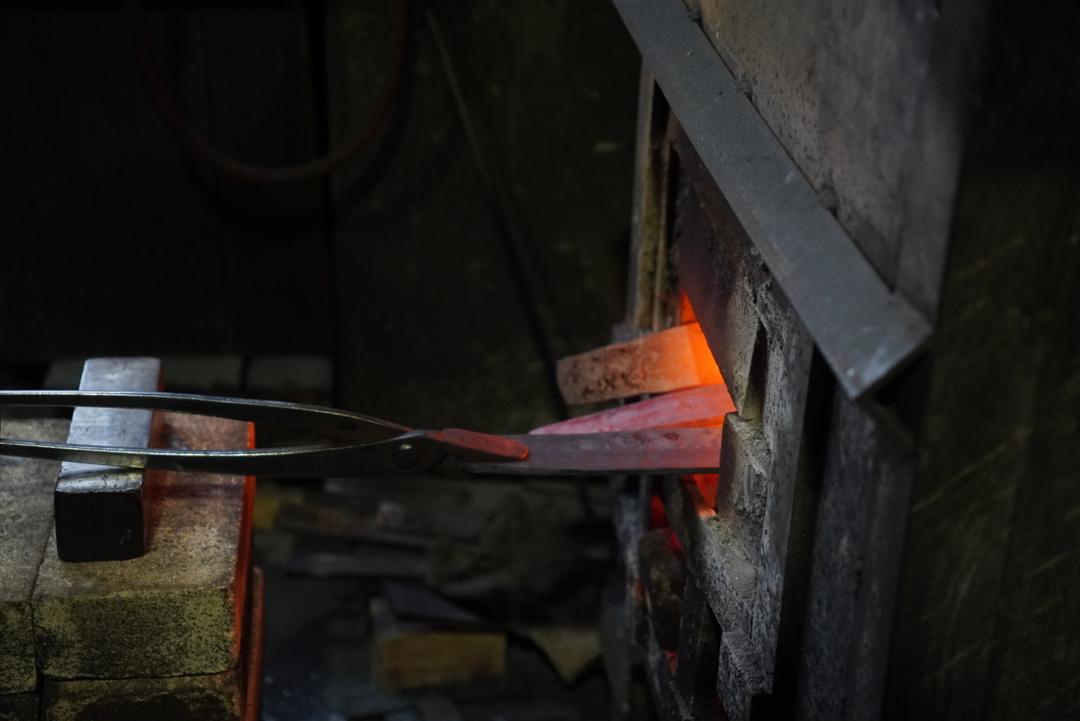
The furnace operates at intense heat, with every degree carefully maintained to ensure a heat treatment of the highest standard
His most celebrated creation is the Sakachoji, or "Reverse Clove," a line of Mizu-honyaki knives bearing a hamon pattern that Nakagawa himself invented. Inspired by the undulating wave patterns found on Japanese swords from the Bizen Yoshioka Ichimonji school of the Kamakura period, the reversed clove design flows along the blade like a living thing, each curve the result of immense skill and intention. These knives are produced in extremely limited quantities each year. In 2025, just thirty slots were made available, and they sold out in under twenty-four hours. To own one is to hold a piece of both history and innovation in the same breath.
Beyond his technical achievements, those who have visited Nakagawa's workshop often speak of the man himself with a kind of quiet awe. He works at a speed that is almost hypnotic, each hammer strike deliberate, each motion a precise repetition of the last, yet the atmosphere around him is immaculate. Where most smithies carry the grime and scatter of hard industrial work, Nakagawa cleans and reorganises his station after every single forging session. It reflects something deeper than habit. It is a philosophy. Excellence in craft is not an accident but the outcome of consistent discipline applied at every level, from the grandest technique down to the smallest gesture.
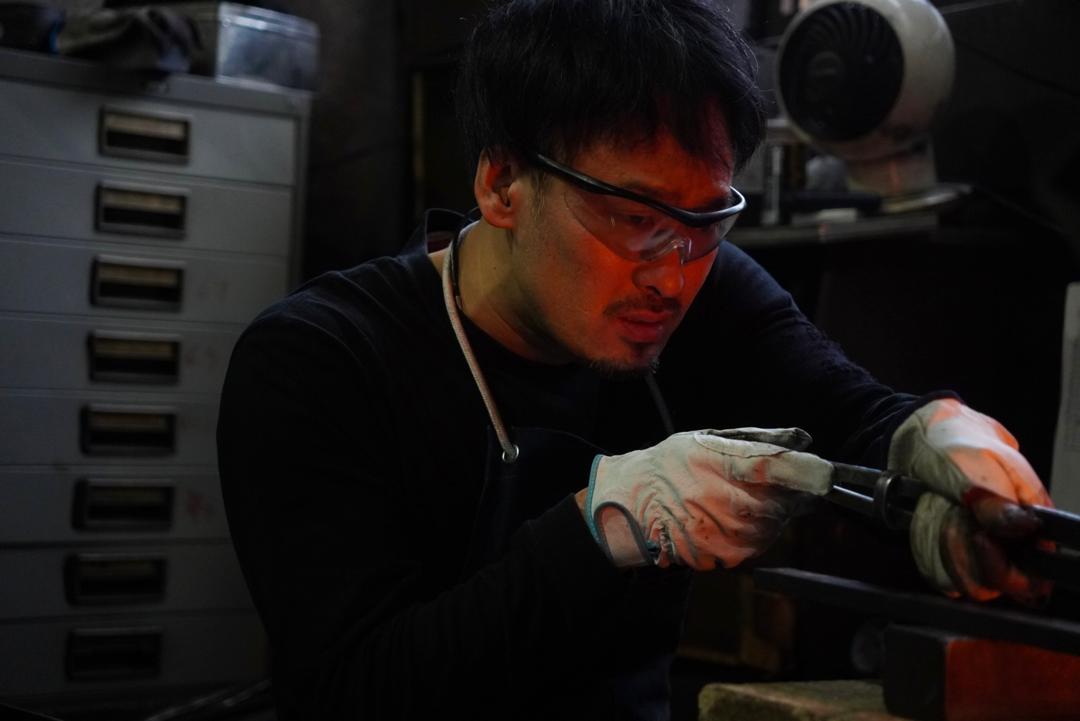
Each strike, each turn of the blade is executed with complete control and practiced accuracy
Today, Satoshi Nakagawa's knives are carried by respected shops across Japan and around the world, and his reputation continues to grow among collectors, chefs, and craftsmen who truly understand what they are looking at. One such place is Churika Knives Shop, which carries his blades under the exclusive label Touroku Sakai, sharpened to a refined edge by Shimizu Masaya, and finished with fully customised wa handles and saya casings handcrafted by Khoosyi from the Churika team. Each handle is made from a distinctive two-tone Kempas wood, a choice that honours the warmth and soul of Southeast Asian timber while complementing the cold precision of Nakagawa's steel. It is a beautiful collaboration, a Japanese blade of rare pedigree given a local identity, bringing world-class craftsmanship a little closer to home.
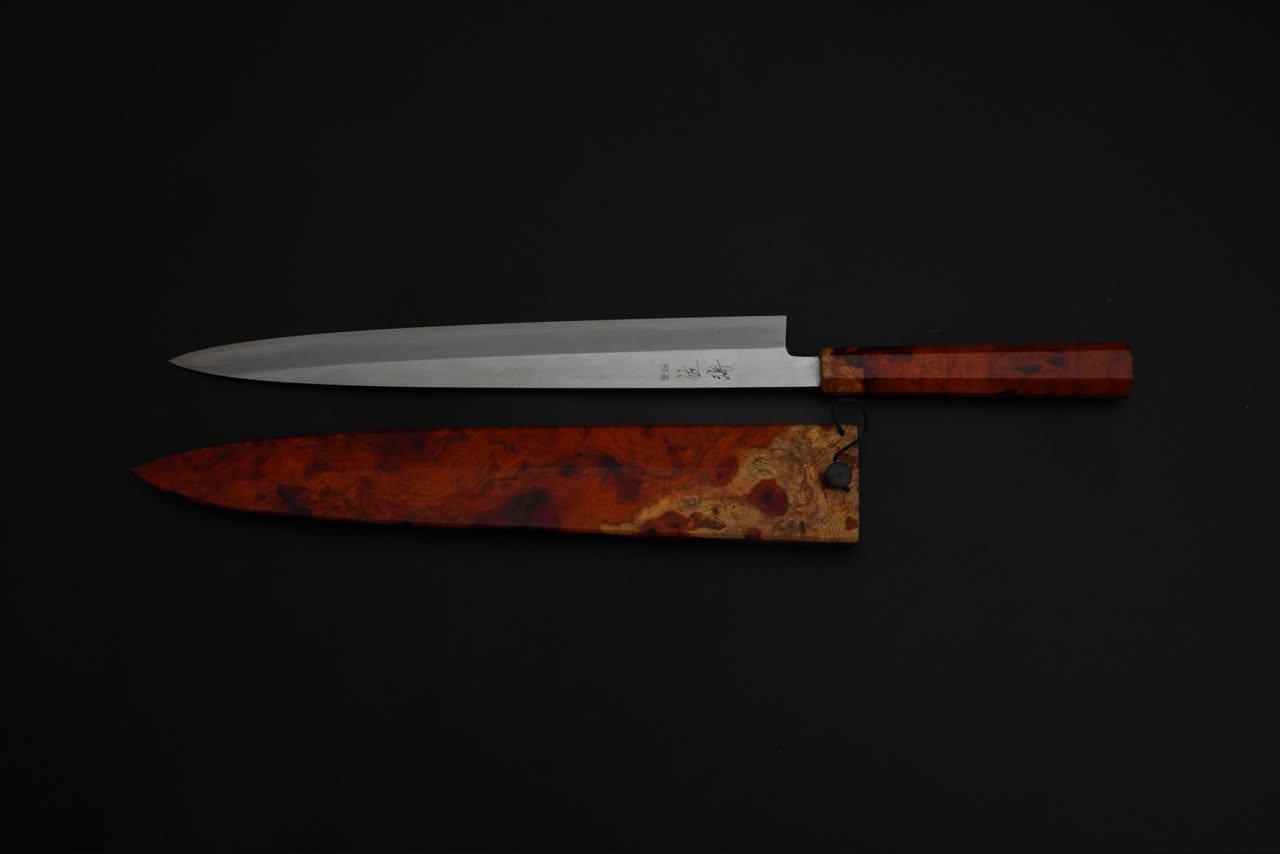
View Nakagawa knives available at Churika Knives Shop